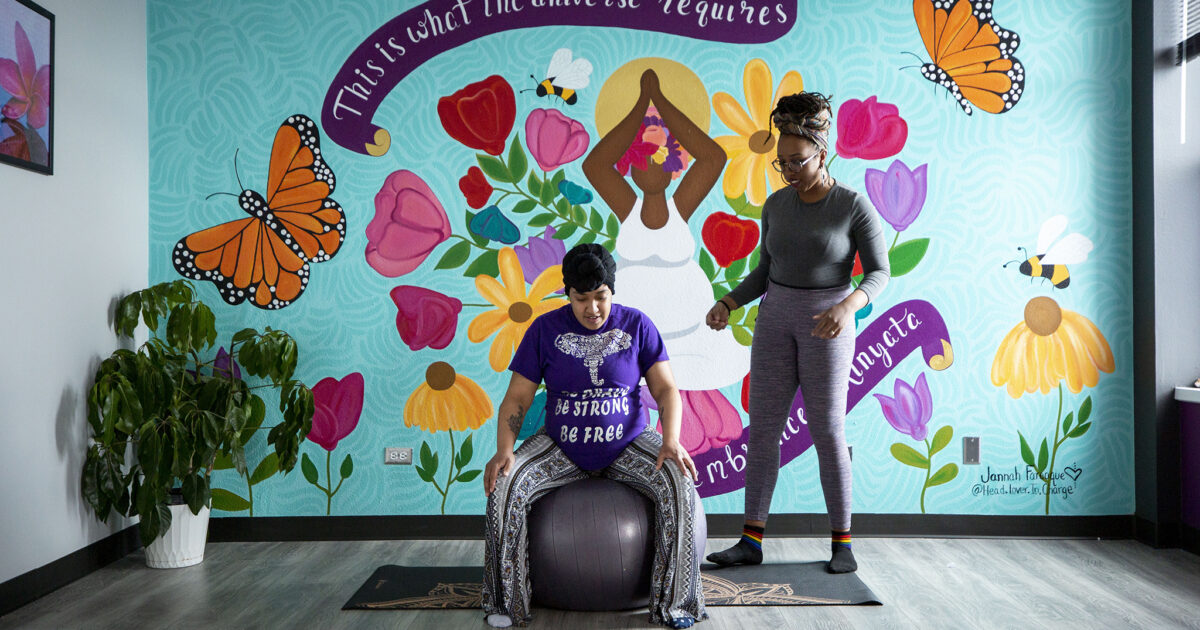
A doula is a trained support person who helps families during pregnancy, through labor, and after the baby is born. Think of a doula as a labor coach, a guide, and a pregnancy and birth bestie rolled into one. Doulas don’t deliver babies or provide medical care. They offer practical, social, and emotional support.
As a doula, you might help a parent prepare questions for a prenatal visit, press on their lower back during a contraction, or help them speak up when they need their care team to explain their options. After the baby comes home, you might help the family find feeding support or figure out who to call about benefits.
Enrollment opens January 1, 2027. Training is expected to begin in late February 2027.
why Choose Catalyst?
A doula is a trained support person who helps families during pregnancy, through labor, and after the baby is born. Think of a doula as a labor coach, a guide, and a pregnancy and birth bestie rolled into one. Doulas don’t deliver babies or provide medical care. They offer practical, social, and emotional support.
As a doula, you might help a parent prepare questions for a prenatal visit, press on their lower back during a contraction, or help them speak up when they need their care team to explain their options. After the baby comes home, you might help the family find feeding support or figure out who to call about benefits.
What does a doula actually do?
A doula is a trained, nonmedical professional who provides emotional, physical, informational, and practical support during pregnancy, labor, birth, and the postpartum period.
Doulas help clients:
Prepare for birth and the weeks after a baby arrives
Understand their options and make their own informed decisions
Use comfort measures and coping techniques during labor
Communicate their questions, preferences, and needs
Connect with community resources and practical support
Feel heard, respected, prepared, and less alone
Doulas do not diagnose medical conditions, perform medical procedures, or replace doctors, nurses, or midwives. We make sure families have a skilled person focused on supporting them.
Yes—Kansas Medicaid pays doulas for this work
This is the part many people do not know: Kansas Medicaid, also called KanCare, covers doula services for eligible pregnant and postpartum clients. Doulas who meet the requirements and complete provider enrollment may practice and bill independently or as part of a doula group.
The standard Kansas Medicaid benefit currently reimburses:
| Covered Doula Service | Standard Limit | Listed Reimbursement |
| Prenatal Support | Up to 28 15-minute units or 7 hours | Up to $420 |
| Labor and Birth Support | One labor and delivery attendance | $500 |
| Postpartum Support | Up to 25 15-minute units or 6 hours 15 minutes | Up to $375 |
| Potential Total for all standard Covered Services | 13 hours 15 minute plus labor and birth | Up to $1,295 |
For prenatal and postpartum care, Medicaid reimburses $15 for each covered 15-minute unit—the equivalent of $60 for a full hour of eligible, documented service.
If you provide every standard covered service for one eligible client and the claims are approved, the listed reimbursement can total up to $1,295 for that pregnancy.
That is gross business revenue, not an hourly wage or guaranteed take-home pay. Payment depends on client eligibility, provider recommendation, proper enrollment, covered and documented services, and approved claims. Like any self-employed professional, a doula is also responsible for business expenses and taxes.
You are not applying to work for us. You are learning to work for yourself.
Kansas Birth Justice Society trains doulas. We do not employ scholarship recipients or pay graduates’ wages.
As an independent doula, you can:
Decide how many clients you have the capacity to serve
Begin part-time and grow your practice at your own pace
Schedule many prenatal and postpartum visits around school, work, and family responsibilities
Choose the communities and geographic area you want to serve
Build relationships and referrals in the community where you already have roots
Serve Medicaid clients and, if you choose, private-pay clients as well
You are also responsible for the business side of your work: finding and communicating with clients, keeping records, documenting services, submitting claims, planning for taxes and expenses, and making reliable arrangements for on-call periods.
Being your own boss offers flexibility. It also requires initiative, consistency, and responsibility. Catalyst teaches both the care and the business of doula work.
Maybe you already have the part we cannot teach.
This opportunity may be an especially strong fit for:
Mothers whose own children are now elementary-aged or older and who have room to build something new
Grandmothers, aunties, and experienced caregivers who have spent years showing up for families
Community health workers, home visitors, peer supporters, advocates, and resource navigators
People with lived experience of pregnancy, birth, postpartum, pregnancy loss, or navigating the healthcare system
Trusted community members who understand the language, culture, strengths, and realities of the families around them
People who want flexible, purpose-driven work and are ready to build a business of their own
You do not need to be a nurse. You do not need a medical degree. You do not need previous doula experience.
You do need to be dependable, able to listen without judgment, respectful of each client’s choices, willing to learn, and serious about completing the training and building a professional practice.

Can doula work fit around a family or another job?
It can. Many doulas begin part-time. Prenatal and postpartum visits are scheduled in advance and can often be planned around school hours, family responsibilities, or another job.
Births are different: babies do not arrive on a schedule. Doulas who attend births need reliable transportation, a plan for childcare or other responsibilities, and the ability to be on call during agreed-upon periods. You decide how many birth clients you can responsibly accept.
How the 80-hour training works
- Learn online at your own pace. Complete about 60 hours of lectures and evaluations.
- Choose your two Skills and Drills dates. Attend one nine-hour day for each of two different skills sessions. Each session is offered once every three months, giving you four dates a year to choose from for each one.
- Take up to a year to finish. You can graduate as soon as you complete the requirements, with graduation opportunities every three months.
Tuition is $1,500, including the $100 final testing fee and the $100 certification fee. We'll announce legacy scholarships soon.
Get enrollment and scholarship updates
Leave your name and email so we can let you know when enrollment opens and how to apply for scholarships.
Frequently asked questions
No. This is a full scholarship for professional training, not a job offer. Catalyst prepares you to establish and operate your own independent doula practice.
No. Kansas Medicaid currently reimburses certain eligible prenatal and postpartum services at $15 per 15-minute unit, which equals $60 for a full hour of covered, properly documented care. That is gross business revenue—not a guaranteed wage—and not every hour spent operating a business is billable.
Under the standard benefit currently listed by Kansas Medicaid, reimbursement can total up to $1,295 when a doula provides all covered prenatal, labor-and-delivery, and postpartum services and the claims are approved.
No. Doula care is nonmedical. Catalyst teaches the knowledge, hands-on support skills, professional boundaries, documentation, and business practices needed to work safely and effectively.
Yes. You control your caseload. Some doulas serve a small number of clients alongside another job or family responsibilities; others gradually build a fuller practice.
We help graduates understand how to establish a practice, build referral relationships, and connect with the statewide doula network. We do not guarantee clients, Medicaid enrollment, claim payment, or a specific income. Every independent doula must participate in building and maintaining their own practice.